Image credits: Time Out Singapore
Exhibition Review: Amazonia: Photographs by Sebastião Salgado
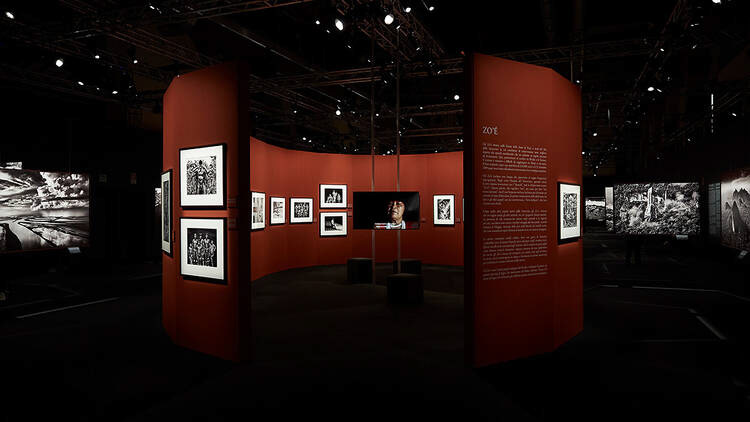
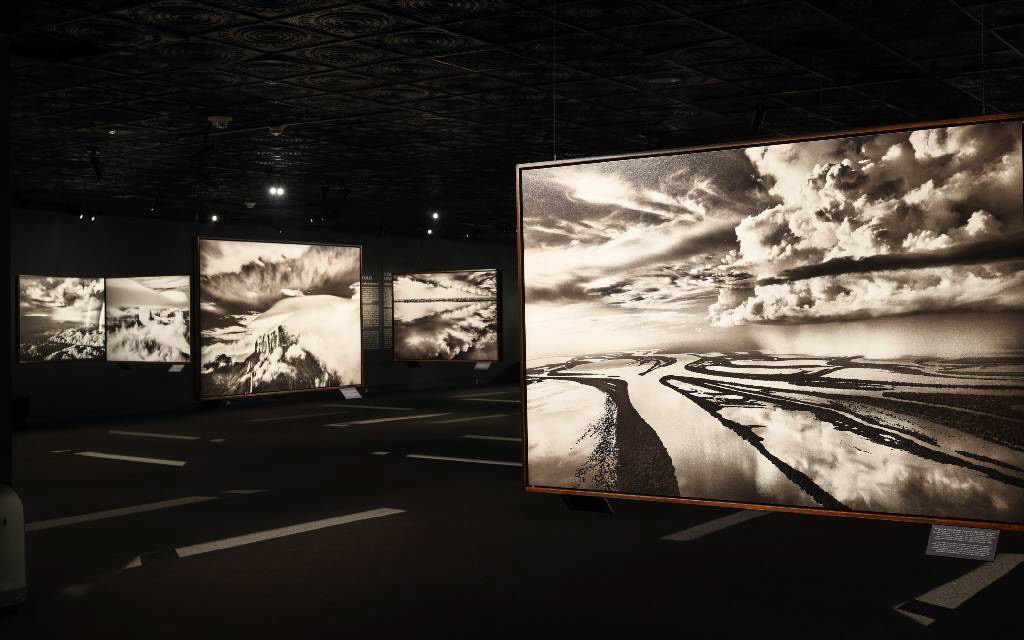
In Amazonia, Sebastião Salgado presents a hauntingly beautiful archive of the Amazon rainforest and its Indigenous peoples. Spanning over 200 black-and-white photographs taken across seven years, the exhibition—accompanied by Jean-Michel Jarre’s ambient soundscape—immerses viewers in the dense ecosystems and human narratives of the world’s largest tropical forest. But beyond its aesthetic grandeur, Amazonia raises urgent ethical and postcolonial questions: How do we represent spaces that have long been subjected to imperial extraction, ecological violence, and epistemic erasure? Who gets to speak for these communities and lands?
Salgado’s visual language avoids the glossy tropes of exoticism that have historically plagued depictions of Indigenous life. His monochromatic treatment resists the romanticised palette often used in National Geographic-style ethnography. The curatorial notes rightly stress that this exhibition is not about spectacle, but about witnessing. And yet, one must ask: is it ever possible to completely detach from the colonial gaze? Can the act of photographing the Amazon—especially as a non-Indigenous outsider—fully escape the long shadows of imperial cartography and ethnographic documentation?
These questions resonate deeply with my own practice. I am acutely aware of the colonial violence that has distorted and commodified local myths—reducing nuanced cosmologies into simplistic tales for tourist consumption. Like the Amazon, the Malay world has been mapped, categorised, and extracted—its land, people, and stories filtered through colonial lenses. My work seeks to reclaim these narratives not as fixed artefacts but as evolving, living memories, allowing them to breathe and transform within contemporary contexts.
Salgado’s ethical approach—developed through long-term collaboration with Indigenous communities—offers a partial antidote to extractive modes of seeing. His images evoke care rather than conquest. Yet, the very act of exhibiting these photographs in Western institutions or global art circuits still risks reproducing the logic of display that has historically dehumanised the “Other.” This is not a critique of the artist’s intent, but a recognition of how representation itself is entangled in power.
As someone whose own installation work relies on layers, text and sound interaction, I am similarly invested in how meaning is never neutral. My use of translucent media and generative sound responds to this: a refusal to present cultural identity as static or legible through a singular lens.
What’s especially compelling in Amazonia is the interplay between stillness and resistance. Salgado’s forests seem timeless, but they whisper of violence—mining, colonisation, ecological collapse. His portraits are dignified yet precarious, echoing the quiet endurance of communities under siege. In my own practice, I often explore this tension: how myths mutate under pressure, how monsters become metaphors for colonial trauma, how forgotten places become mnemonic devices for loss.
Amazonia, then, is not just a visual elegy—it’s a postcolonial archive. It asks us to see the rainforest not merely as a place of wonder, but as a contested terrain of memory and survival. And like the folkloric beings I resurrect in my art, Salgado’s images serve as guardians—preserving what remains, resisting what threatens to disappear, and haunting those who dare to forget.